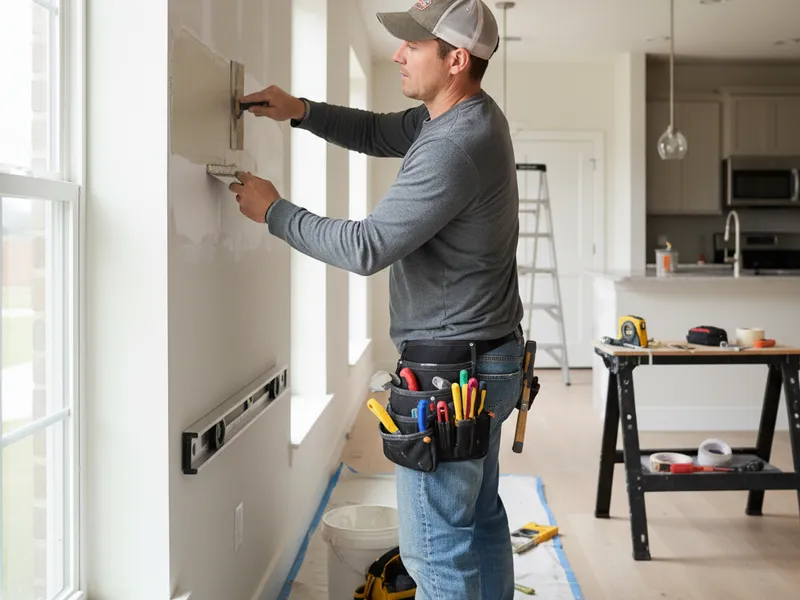
Drywall Repair
Seamless patching, texturing, and finishing that disappears into the wall.
Drywall takes a beating in a busy home or business. Doorknobs punch holes, settling cracks open seams, and a single leak can leave a stained, crumbling ceiling. Terracotta Construction repairs all of it, from a small ding to a full panel, with clean patches, matched texture, and a smooth surface that is ready for paint. We are locally owned in Montgomery, Texas, licensed and insured, and we offer free estimates on every drywall job.
What Drywall Repair Covers and Who Needs It
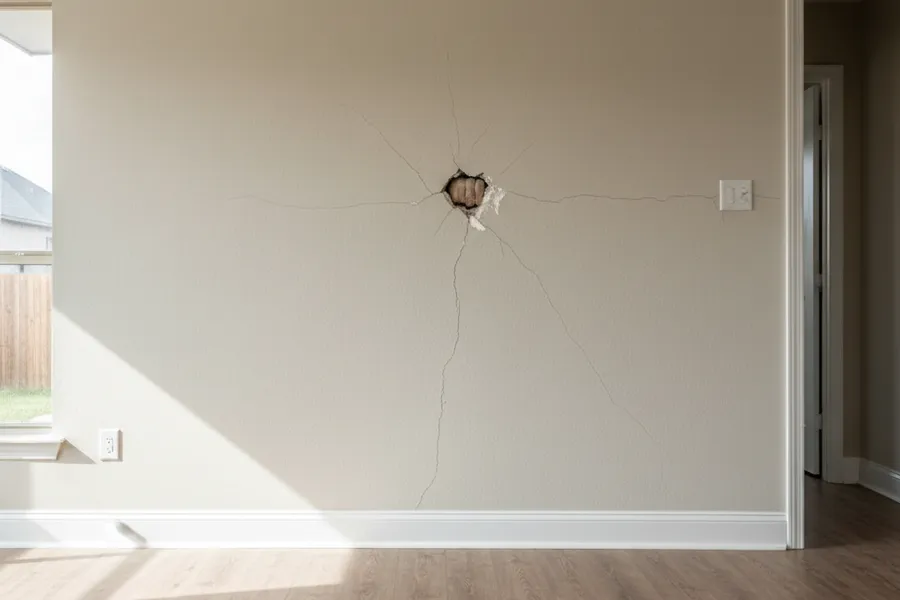
Drywall repair is the work of restoring damaged wall and ceiling surfaces back to a flat, solid, paint-ready state. That includes patching the obvious things like nail pops, doorknob holes, and hairline cracks, as well as bigger problems like sagging panels, corner bead that has been knocked loose, and sections softened by old water leaks. Whatever caused the damage, the goal is the same: a surface that looks like nothing ever happened to it.
Homeowners are our most common drywall customers. Walls get scuffed and dented as kids grow up, furniture gets moved, and pictures come down off the wall. We also see a lot of repairs after plumbers, electricians, or HVAC techs cut access holes to reach pipes and wiring. That work has to be opened up, and once the repair behind the wall is done, the drywall needs to be closed back up cleanly.
Businesses and rental property owners count on this service too. Landlords turning over an apartment or rental house need fast, reliable patching before new tenants move in. Office and retail spaces deal with wear in hallways, breakrooms, and entryways. Wherever the drywall is, residential or commercial, we treat the repair the same way and finish it so it blends in with the surrounding surface.
Patching Holes, Cracks, and Water Damage
Different damage calls for different repairs, and matching the method to the problem is what keeps a patch from showing later. Small holes from nails, screws, and anchors get filled, sanded, and feathered flat. Medium holes, the kind a doorknob or a kicked toe leaves, need a backed patch so the filler has something solid to hold to. Large openings get a fresh piece of drywall cut to size, screwed to backing or studs, then taped and mudded into the existing wall.
Cracks are their own situation. A thin crack along a seam or above a doorway usually traces back to normal settling, and we tape and compound it so it stays closed instead of reappearing. Stress cracks at corners and where ceilings meet walls get reinforced so they hold. We open up what needs opening rather than smearing mud over a moving joint, because a buried crack almost always comes back through the paint.
Water damage is the repair that has to be done in the right order. Wet drywall loses its strength, sags, and can grow mold if it is left in place, so the stained or soft material has to come out, not just get painted over. We confirm the source of the moisture has been addressed, cut back to dry and solid framing, and replace the affected drywall. We use quality materials, including moisture-resistant board in damp areas like bathrooms and laundry rooms, so the repair stands up to the conditions that caused the problem in the first place.
Texture Matching for an Invisible Repair
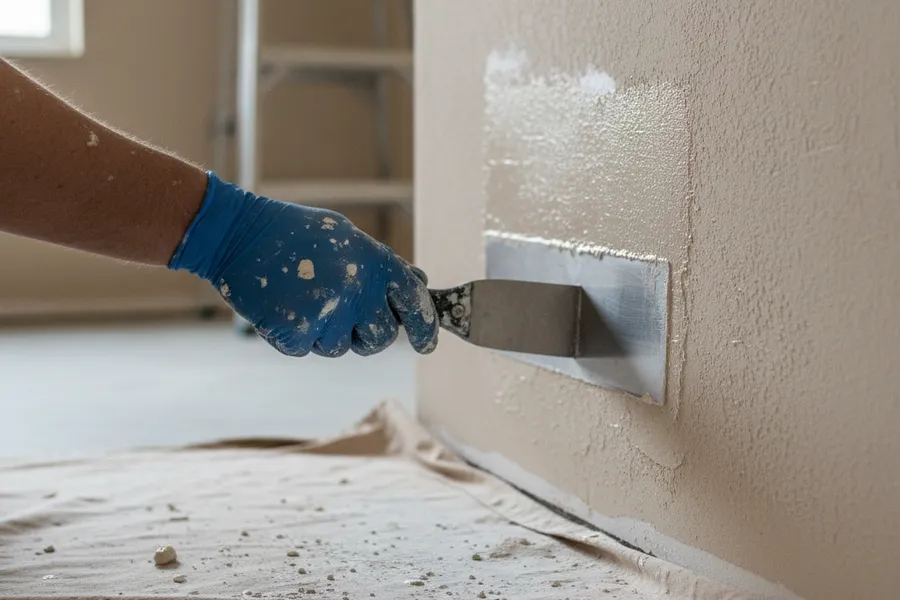
A patch that is flat and solid still stands out if the texture does not match the rest of the wall. Texture is the part most do-it-yourself repairs get wrong, and it is the reason an old fix is easy to spot from across the room. We match the surrounding surface so the repaired area disappears into the wall or ceiling around it.
Knockdown is one of the most common textures in this part of Texas, with its flattened, mottled look, and we recreate it by spraying and then knocking down the high spots to the right depth. Orange peel is the fine, sprayed-on spatter you see on many newer walls, and matching it comes down to dialing in the right spray pattern and consistency. Smooth, flat walls are the least forgiving of all, because there is nowhere for an imperfection to hide, so they get extra attention during sanding and finishing.
We test and adjust the texture before committing it to your wall, comparing it against the existing pattern so the scale and spacing line up. The aim is always the same. When we are done, you should not be able to point to where the repair was, even with the lights on and the paint applied.
What to Expect During the Repair
The job starts with a look at the damage and a free estimate. We walk the area with you, identify what caused the problem, and explain what the repair involves and how long it should take. Some patches are done in a single visit. Others, especially larger replacements and full texture jobs, need more than one trip back because joint compound has to dry between coats, and rushing that step is what leaves cracks and ridges behind.
On repair day we protect the space before we cut or sand. Furniture gets moved or covered, floors get protected, and we contain the dust that drywall sanding always creates so it does not drift through the rest of your home or business. Then we make the repair, taping and applying compound in coats, letting each one dry, and sanding between them until the surface is flat and even with the wall around it.
Once the surface is built up and sanded, we apply the matching texture and let it set. We prime the repaired area so it takes paint evenly and leave it paint-ready, and we can talk with you about handling the painting too. Before we leave, we clean up the work area, haul off the debris, and walk the finished repair with you so you can see that it blends in the way it should.
Why Doing Drywall the Right Way Matters
Drywall looks simple, and that is exactly why so many quick fixes fail. A patch that was not backed properly cracks the first time the wall flexes. Compound applied too thick or sanded too soon leaves ridges and shadows that the paint only highlights. Texture that does not match turns a small repair into an eyesore. The visible problems are usually a sign that a step was skipped.
The hidden problems matter even more. Painting over water-stained drywall instead of replacing it traps moisture and invites mold, and a leak that was never tracked down keeps doing damage behind the wall. We take the time to find the cause, use the right materials for the location, and build the repair in proper coats so it holds up instead of failing again in a few months.
Our crews are experienced and we stand behind our work with a satisfaction guarantee. Being licensed and insured means you are protected while the work is happening, and being locally owned in Montgomery means we are accountable to the neighbors and businesses we serve. We would rather do it once and do it right than come back to redo a shortcut.
Free Estimates Across Montgomery County and Greater Houston
Whether it is one hole before a party, a ceiling to repair after a leak, or a whole rental to patch and texture before new tenants arrive, Terracotta Construction is ready to help. We serve homeowners, landlords, and businesses throughout Montgomery County and the Greater Houston area, including Montgomery, Conroe, The Woodlands, Magnolia, Willis, Huntsville, Tomball, Spring, Cypress, and Katy.
Getting started is easy. Call us at (936) 955-4083 to tell us what is going on with your walls or ceilings, and we will set up a free estimate. We are local, licensed and insured, and we use quality materials on every job, backed by our satisfaction guarantee. Reach out today and we will get your drywall looking like the damage never happened.
Drywall Repair FAQs
Can you make the patch invisible once it is painted?+
That is the goal on every repair. We patch the damage flat, match the existing texture, whether it is knockdown, orange peel, or smooth, and prime the area so it takes paint evenly. When the work and the paint are done correctly, you should not be able to tell where the repair was.
Do you repair water-damaged drywall and ceilings?+
Yes. We remove the stained or softened material rather than just painting over it, confirm the moisture source has been handled, and replace it with fresh drywall, using moisture-resistant board where it makes sense. Painting over wet drywall traps moisture and can lead to mold, so we cut it out and rebuild it properly.
How long does a drywall repair take?+
Small patches can often be finished in a single visit. Larger repairs and full texture jobs usually take more than one trip because joint compound has to dry between coats before it can be sanded and textured. We will give you a realistic timeline during your free estimate.
Can you match the texture on my existing walls?+
Yes. We match common Texas textures including knockdown, orange peel, and smooth finishes. We test the texture and compare it against your existing surface before applying it, so the scale and pattern line up and the repair blends in with the wall or ceiling around it.
Do you handle the painting after the repair?+
We leave the repaired area primed and paint-ready as part of the job. We can also talk with you about handling the painting so you have one less thing to coordinate. Just let us know what you need when we come out for the estimate.
How much does drywall repair cost?+
Cost depends on the size and type of damage, how much texture matching is involved, and how many areas need work. We offer free estimates, so we will come look at the damage, explain what the repair involves, and give you a clear price before any work begins.
More Handyman Services & Repairs
Need Drywall Repair?
Get a free, no-obligation estimate from a licensed, insured local crew.