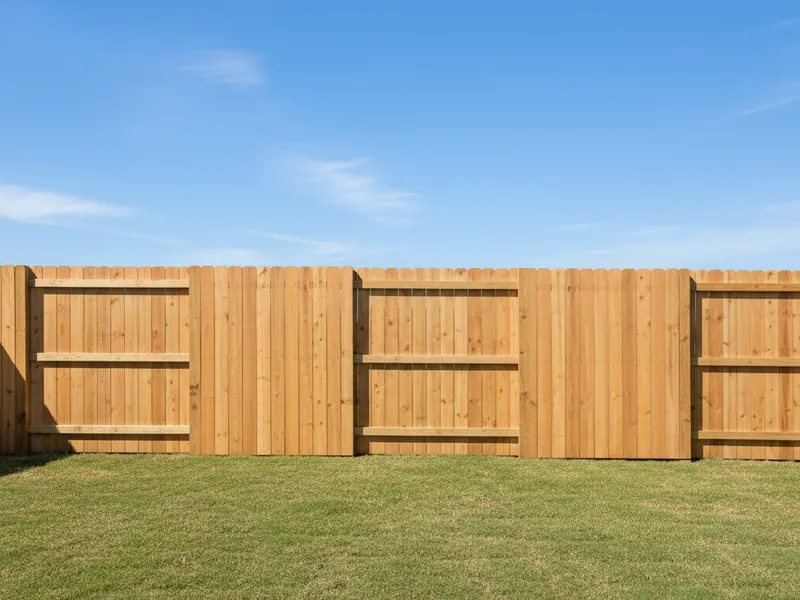
Chain Link Fencing
Durable, affordable security fencing for yards, pets, and commercial sites.
Chain link is the practical choice when you need a strong, see-through barrier that holds up to Texas weather and daily use without a big budget. Terracotta Construction installs and repairs galvanized and vinyl-coated chain link for homes, pet enclosures, and commercial properties across Montgomery County and the Greater Houston area. We set posts deep, tension the mesh properly, and hang gates that swing true. Locally owned, licensed, and insured, with free estimates on every job.
What Chain Link Fencing Is and Who Needs It
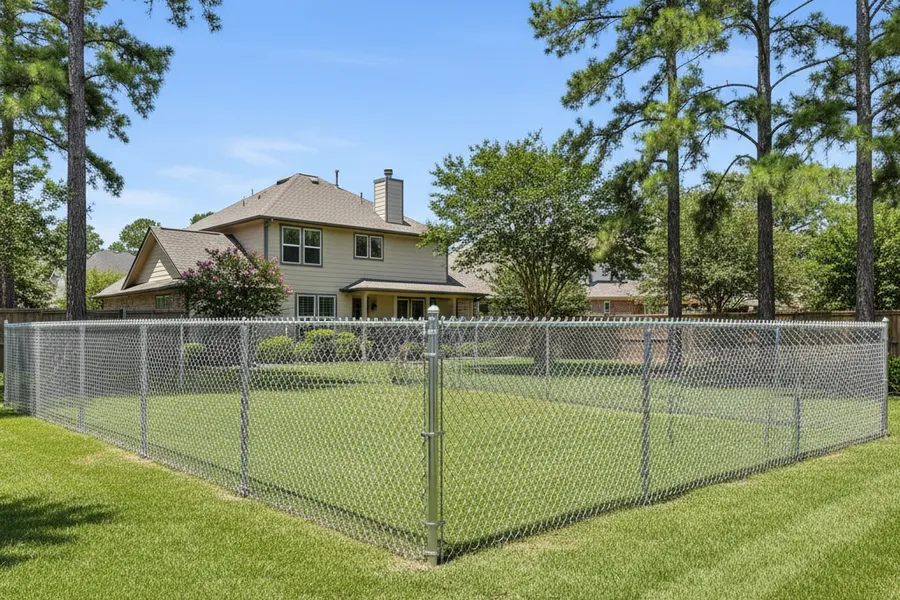
Chain link fencing is a woven steel mesh stretched between posts and held under tension by a framework of top rails, tension wire, and fittings. Because the diamond pattern is open, it marks a clear boundary and keeps things in or out without blocking light, airflow, or your view of the property. That openness is part of why it has stayed popular for decades on everything from backyards to industrial yards.
Homeowners reach for chain link when they want a safe, contained area for kids and pets without paying for a full privacy fence. It is one of the most affordable ways to enclose a large yard, fence off a garden or pool equipment, or keep dogs from wandering toward the road. The mesh is hard to climb cleanly and easy to see through, so you can keep an eye on a play area from the house.
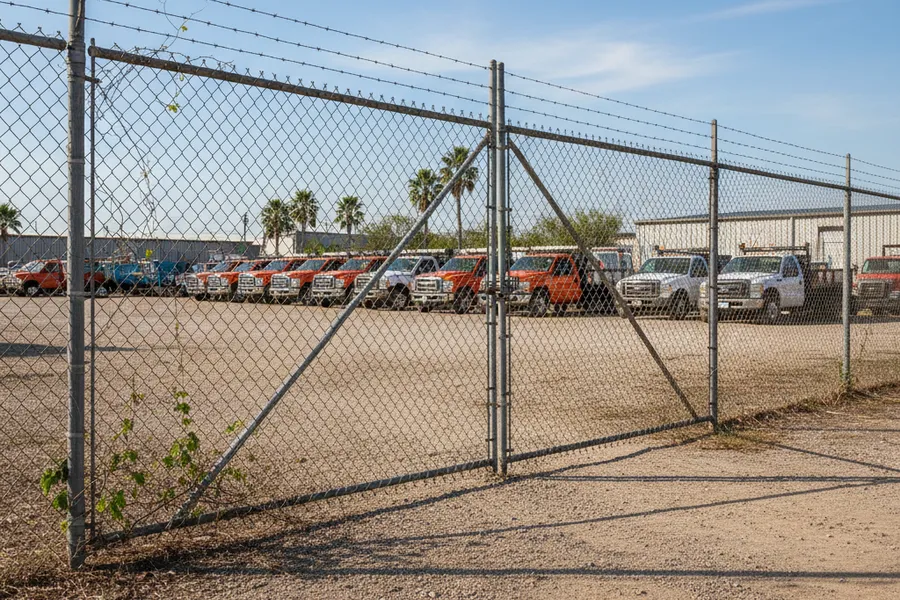
On the commercial side, chain link earns its keep around equipment lots, storage areas, utility sites, ball fields, and job sites that need a secure perimeter fast. It installs quickly over long runs, takes abuse from work traffic, and can be raised to taller heights with barbed or barbless top arms where extra security matters. If your priority is a durable, no-nonsense barrier that does its job for years, chain link is usually the answer.
Options, Materials, and Specifics
Chain link comes in two main finishes, and the right one depends on where the fence lives and how it should look. Galvanized chain link is steel coated in zinc to resist rust, and it gives you that classic bright silver mesh that handles humidity and rain well. Vinyl-coated chain link adds a bonded color layer, usually black, green, or brown, over the galvanized core. The color blends into landscaping and tree lines, softens the look around a home, and adds a second layer of protection against corrosion.
Beyond finish, the gauge of the wire and the size of the diamond mesh set how strong and tight the fence feels. A heavier gauge wire makes for a sturdier fence that stands up to leaning, weather, and active dogs, which is why commercial and security fences often use thicker mesh than a basic residential run. Height is just as flexible. Short runs around three to four feet work well for pets and garden borders, while taller heights of six feet and up are common for security, pools, and commercial perimeters.
The framework matters as much as the mesh. Terminal, corner, and gate posts are heavier than the line posts in between, since they carry the tension load and the swing weight of any gate. We finish runs with the correct tension bands, tension bars, rail ends, caps, and ties so the fabric stays taut and square. Gates come as single walk gates for foot traffic or wider double drive gates for vehicles and equipment, all hung on proper hinges and latches sized to the opening.
The Process and What to Expect
Every chain link project starts with a free on-site estimate. We walk the property with you, talk through what the fence needs to do, measure the runs, and note grade changes, drainage, gate locations, and anything that affects layout. We also encourage you to confirm property lines and have underground utilities marked before any digging, which protects your lines and keeps the install on schedule.
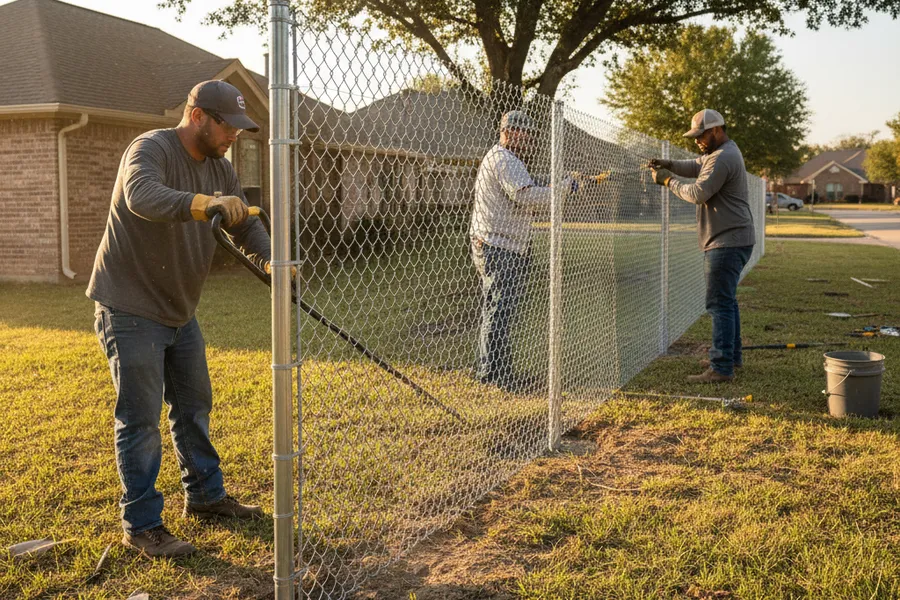
Once the plan is set, installation moves in clear stages. We lay out and dig the post holes, then set terminal and line posts in concrete and let them cure so the fence has a stable backbone. Next we run the top rail and tension wire, stretch the chain link fabric tight along the framework, and lock it in with tension bars and bands. Stretching is the step that separates a fence that stays crisp from one that sags, so we pull the mesh evenly across the whole run rather than tacking it up loose.
We finish by hanging and adjusting gates, fitting caps and ties, and walking the line to check tension, latch alignment, and ground clearance. Before we call it done, we clean up the work area and haul off our debris. You get a fence that opens and closes smoothly, sits square to the posts, and is ready to use. Timeline depends on the length of the run, the number of gates, and the weather, and we give you a realistic window up front.
Quality and Why Doing It Right Matters
A chain link fence is only as good as its anchoring and its tension. Posts that are set too shallow or skipped on concrete will lean and shift the first time the soil swells and dries, and Montgomery County clay does plenty of both through wet springs and dry summers. We dig to a proper depth, set terminal and gate posts in concrete, and space line posts so the fabric has steady support across the whole run. That groundwork is what keeps the fence standing straight for the long haul.
Tension is the other half of the equation. Mesh that is stretched evenly and locked with the right bands and bars resists sagging, bowing, and the gaps that let a determined dog push through at the bottom. We use quality materials and the correct fittings for the job instead of cutting corners on hardware, because the small parts, the caps, ties, hinges, and latches, are what make a fence quiet, smooth, and reliable years down the line.
Gates deserve the same care. A heavy gate hung on an undersized post or set at the wrong slope will drag, sag, and stop latching, which is the most common complaint we fix on poorly built fences. We size the gate framing and hardware to the opening and check the swing so it clears the ground and closes cleanly. As a locally owned company, we stand behind our work with a satisfaction guarantee, and we would rather do it right the first time than come back to a problem we could have prevented.
Get a Free Chain Link Fencing Estimate
Whether you need a few hundred feet of residential mesh to keep the dog in the yard or a tall security perimeter around a commercial lot, Terracotta Construction can scope it, build it, and stand behind it. We handle new installs, repairs, gate replacements, and re-tensioning of fences that have started to sag, and we will give you a straight answer about what your property actually needs.
We serve Montgomery and the surrounding communities, including Conroe, The Woodlands, Magnolia, Willis, Huntsville, Tomball, Spring, Cypress, and Katy. As a locally owned, licensed, and insured company, we know the soil, the weather, and the way these neighborhoods are built, and that shows up in fences that last.
Call (936) 955-4083 to set up your free, no-pressure estimate. Tell us about your property and what you want the fence to do, and we will walk the site, measure the runs, and give you a clear plan and price with no surprises.
Chain Link Fencing FAQs
Is galvanized or vinyl-coated chain link better for my property?+
Both use a galvanized steel core, so both resist rust well. Galvanized leaves the bright silver mesh exposed and is the most economical choice, which makes it popular for backyards, commercial lots, and utility areas. Vinyl-coated adds a bonded color layer, usually black, green, or brown, that blends into landscaping and gives a cleaner, lower-profile look while adding extra corrosion protection. We help you weigh appearance, location, and budget during the free estimate.
How tall should my chain link fence be?+
It depends on the job. Three to four feet is common for garden borders and small pets, while four to five feet suits most backyards and dog containment. Six feet and taller is typical for security, pool enclosures, and commercial perimeters, where it discourages climbing and access. We recommend a height based on what you are containing or protecting and any local requirements that apply to your property.
Will a chain link fence keep my dog contained?+
Yes, when it is built right. The key is proper tension at the bottom of the mesh and posts set firmly in concrete so the fabric cannot be pushed out or dug under easily. For diggers, we can talk through options like setting the fence with minimal ground gap. A loosely stretched fence is what lets dogs push through, which is exactly the problem we avoid by stretching the mesh evenly and locking it with the correct hardware.
How long does chain link fence installation take?+
Most residential runs are completed in a short window, but the exact timeline depends on the length of the fence, the number and size of gates, ground conditions, and the weather. Because we set terminal and gate posts in concrete, those need time to cure before we stretch the fabric. We give you a realistic schedule during the estimate and keep you updated if weather affects the work.
Can you add gates to a chain link fence?+
Yes. We install single walk gates for foot traffic and wider double drive gates for vehicles and equipment, sized to your opening and hung on hinges and latches matched to the gate weight. We can add gates to a new fence or replace failing gates on an existing one. Proper post sizing and swing adjustment are what keep a gate from sagging or dragging over time.
Do you repair existing chain link fences or only install new ones?+
We do both. We re-tension sagging mesh, replace bent or leaning posts, patch damaged sections, swap out worn hardware, and rebuild or rehang gates that no longer latch. If a section was damaged by storms, a vehicle, or just age, call us and we will assess whether a repair or a partial rebuild makes the most sense for your property.
More Fencing Installation & Repair
Need Chain Link Fencing?
Get a free, no-obligation estimate from a licensed, insured local crew.